
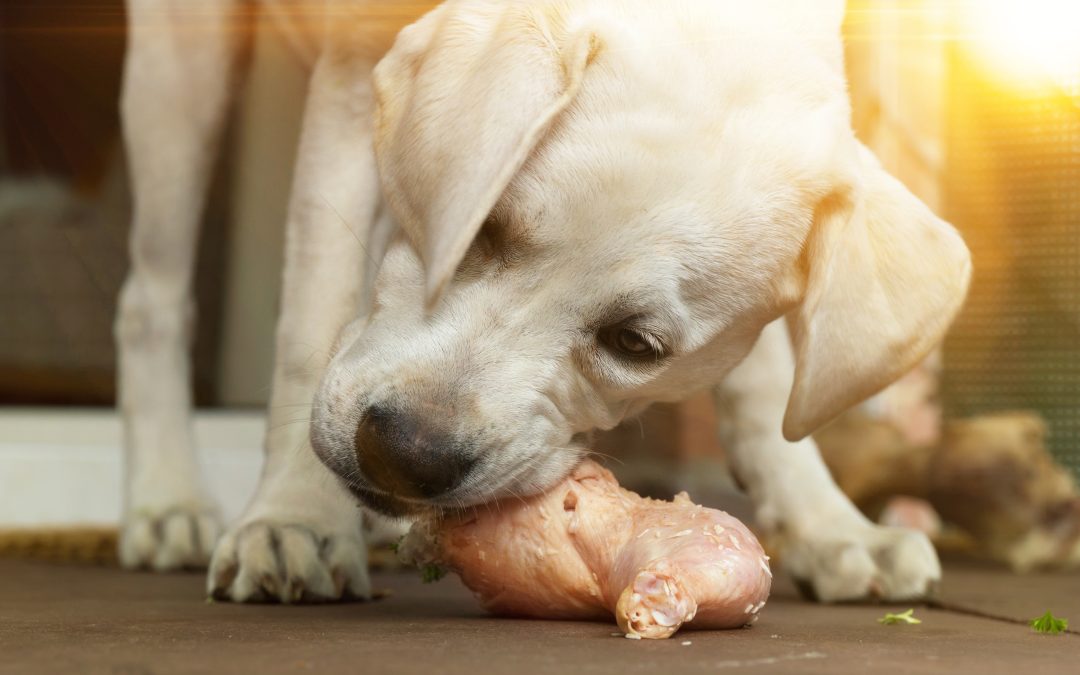
The age-old archetype of a dog contentedly gnawing on a bone is incredibly pervasive in some forms of media, especially old cartoons. This trope leads some dog owners to believe that bones are healthy for their pets. After all, wolves, your dog’s closest ancestors and living relatives, can consume and digest the bones of their prey in the wild.
So, can dogs swallow chicken bones? Penny Paws explains how giving the dog a bone can have devastating health consequences below. You’ll also learn what to do should your dog consume a chicken bone by accident.
Can Dogs Swallow Chicken Bones Without Health Scares?
Many dogs can technically eat raw chicken bones without any issues. Before modern technology and food access became more prevalent, dogs frequently consumed raw bones as part of their meals. The problem with chicken bones is that their hollow structure makes them more prone to splintering into small, sharp pieces.
Your dog can more safely chew big, solid bones that come from cows, pigs, and other large livestock. But what about cooked chicken bones as dog snacks? Those are even more dangerous than their raw counterparts.
Cooked bones from chickens or any other animal become more delicate. When your dog chews one, they can more easily splinter it into sharp shards that cut or become lodged inside soft internal tissues. Speak with your vet about optimal dog nutrition for safer options with similar nutrient profiles.
What Potential Emergencies Can Arise If My Dog Swallows a Chicken Bone?
Can dogs swallow chicken bones safely? Adult dogs can chew and swallow raw chicken bones without incident under most circumstances. However, you should never give your dog a whole raw or cooked bone to avoid potential medical complications. Otherwise, you might need an emergency vet visit to mitigate the risks of bones for dogs outlined below.
Common Symptoms
If your dog somehow acquires and consumes a chicken bone without your knowledge, they may exhibit the following symptoms if the forbidden snack doesn’t pass through uneventfully:
- Hacking, retching, or gagging noises
- Constant drooling and licking
- Painful digestion
- Vomiting and diarrhea after eating other foods
- Breathing difficulty
- Straining to defecate
- Noticeable abdominal bloat
- Lethargy and disinterest in food
Take your dog to the vet as soon as you can when you notice these prolonged symptoms. Any of them could mean your dog has an internal problem that won’t get better without medical intervention. Let’s explore some of the potential diagnoses below.
Digestive Obstructions
Puppies and small dog breeds are particularly at risk of bones obstructing their digestive system due to their small size. A digestive blockage may occur in the throat, airway, or intestines. Your dog might cough, hack, drool, or gag from an esophageal or airway obstruction.
Intestinal blockages can cause bloody, runny excrement, constipation, and vomiting. You should always treat an obstructed digestive tract or airway as an emergency.
Oral or Gastrointestinal Tears
Can dogs swallow chicken bones without developing internal blockages? Sometimes, they can, but not without other risks. Since hollow chicken bones readily break into tiny sharp pieces, your dog can quickly chew through them with their sharp teeth and powerful jaws.
This makes the bone fragments easier to swallow and digest. However, the pieces may have jagged edges that puncture or scrape delicate internal tissues. The bone fragments themselves can become wedged inside those tissues, inviting infections.
Internal bleeding may lead to bloody stools or vomit. Your dog’s appetite may go downhill, and you might notice that they show discomfort when you rub their belly.
Bacterial Contamination
Even though wild canids can safely consume raw meat, the same cannot always be said for your dog. First, wolves and their canine relatives eat fresh kills that haven’t had time to attract harmful colonies of bacteria. Second, many modern dogs are accustomed to food formulas treated with heat and other processes that eliminate bacteria.
If your dog eats a raw bone from the chicken you’ve stored in your refrigerator, they can also consume enough harmful bacteria to make them sick. E. coli, Listeria, and Salmonella are just a few examples of the microorganisms that thrive on raw meat.
How Should I Deal With Swallowed Bones?
How can dogs swallow chicken bones without the health risks? What should you do if your dog ate chicken bones while you turned your back?
- Take away any bone remnants that you can access. Command your dog to drop or leave the bone. Collect and discard all remaining fragments so your pet can’t access them again.
- Check your dog’s mouth and upper throat for bone fragments. Remove what you can easily access. Avoid aggressive or forceful movements because force might make the situation worse.
- If you see your dog choking on bone pieces, try the Heimlich maneuver for dogs. This maneuver can help dislodge and catapult foreign objects from your dog’s body in active choking situations.
- Watch your dog closely for the next 48 hours. Remember the above-listed symptoms while keeping an eye on your dog. See if your pet expels the bones safely when using the restroom.
- Please don’t make your dog vomit or feed it anything besides dog food. Making your dog vomit might wedge bones even further into their tissues. Avoid recommendations like making your dog swallow grease or oil-soaked cotton to lubricate stuck bone pieces.
- Seek emergency dog care for bones at your local veterinarian if you notice worsening symptoms. Call or bring your dog to Penny Paws as soon as it exhibits symptoms indicative of a blockage or tear. Time is of the essence under these dangerous circumstances.
What Should You Do If Your Dog Ingests a Chicken Bone? Get Penny Paws on the Phone!
Can dogs swallow chicken bones? Penny Paws recommends keeping raw or cooked chicken bones away from your beloved pet. Even when you watch your dog closely, dogs and cats can be masters at hiding their pain.
Contact us to book a routine appointment and learn about safe alternative chew toys for your dog’s enjoyment.